

moloch
New member
I have just returned from a trip to tropical Queensland. While there, I met Gus, a grad student at JCU, who is interested in the leaf-tailed geckos. He kindly took me to the localities where some of the unusual Phyllurus live. I will be posting several reports of these over the next couple of weeks.
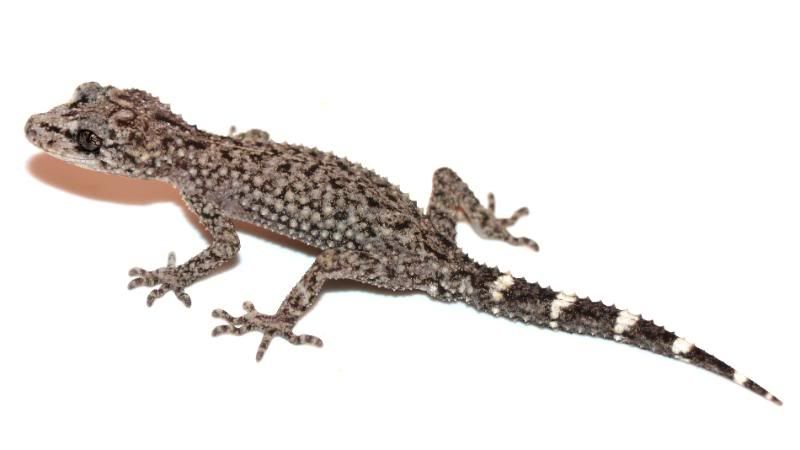
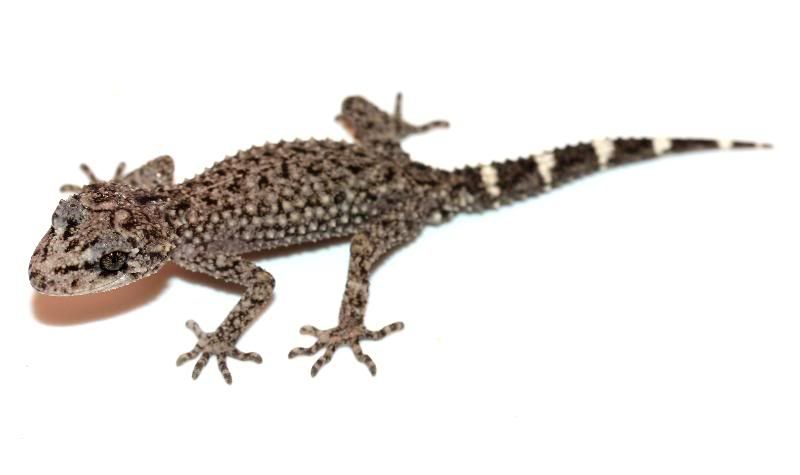
The gecko in this report, Phyllurus gulbaru, was especially rewarding to find since it is known from only a couple of gorges in an isolated ridge top of the Hervey Range a little south of Paluma (near Townsville). The gecko was only discovered a few years ago and was described in 2003. Access to the site is difficult so I think that I am one of the lucky few to have seen and photographed this lizard in the wild. The walk up the gorge at night was difficult and it took us several hours to finally reach the right habitat. We had to climb around waterfalls and mostly rock-hop our way up the mountain. Our shirts were soon dripping wet with perspiration due to the warm temperature and about 100% humidity. The gecko was common once we reached the upper rainforest but it seemed to be very specific about its habitat requirements. All but one of the 10 that we encountered was in the creek bed where there were huge boulders with cracks. Smaller boulders did not seem suitable. One animal was also seen near the base of a shrub a little above the creek bed. We searched other likely looking sites above the creek bed but had no luck. It seemed that these geckos were restricted to the coolest sites with high humidity.
Phyllurus gulbaru


We saw other animals here and in the nearby Paluma Range. Here are a couple of habitat shots from the Paluma Range. I was unfortunately not able to take habitat shots of the habitat of P. gulbaru since we were only there at night.

Lawyer Vine, a climbing palm that is covered with small hooks. These plants attracted my attention while I was walking through the forest. Their tendrils latched onto my clothes and skin and would not let go.

Northern Barsided Skink (Eulamprus brachysoma) -- we saw a number of these often asleep on boulders.


Pink-tongued Skink (Cyclodomorphus gerrardii[/]) -- we saw three of these included an unpatterned individual while we climbed in the gorge at night.


Boyd's Forest Dragon (Hypsilurus boydii)


Brown Tree Snake (Boiga irregularis) -- we found one of these hunting at night. It would no doubt be a predator of the Phyllurus.

Scrub Python (Morelia kinghorni) -- we saw two of these in the gorge at night.

Eastern Small-eyed Snake (Cryptophis nigrescens) -- We found two of these hunting in the gorge at night. I think that these would be another potential predator of the Phyllurus.

Stoney Creek Frog (Litoria wilcoxi[/I])
male

female

Orange-thighed Frog (Litoria xanthomera) -- these frogs were particularly beautiful. I love the eyes, particularly of the really unusual one with differently coloured eyes.


Golden Bowerbird
Gus showed me a Golden Bowerbird bower not far from the township of Paluma. These bowers are huge. The bird would display on the top, cross branch and also on the branch near the flowers.

These birds have an artistic sense and it was re-arranging the flowers on its bower. It quivered its wings and called while doing this.


Tooth-billed Catbird
This is the display site of another bowerbird known as a Tooth-billed Catbird. They clear an area on the forest floor then decorate it with upturned Neolitsea leaves. They dance and call loudly from these display sites.


These amorous snails were common in the gorge at night. They seem quite odd.


Giant millipedes were also common in the gorge at night.

Regards,
David
The gecko in this report, Phyllurus gulbaru, was especially rewarding to find since it is known from only a couple of gorges in an isolated ridge top of the Hervey Range a little south of Paluma (near Townsville). The gecko was only discovered a few years ago and was described in 2003. Access to the site is difficult so I think that I am one of the lucky few to have seen and photographed this lizard in the wild. The walk up the gorge at night was difficult and it took us several hours to finally reach the right habitat. We had to climb around waterfalls and mostly rock-hop our way up the mountain. Our shirts were soon dripping wet with perspiration due to the warm temperature and about 100% humidity. The gecko was common once we reached the upper rainforest but it seemed to be very specific about its habitat requirements. All but one of the 10 that we encountered was in the creek bed where there were huge boulders with cracks. Smaller boulders did not seem suitable. One animal was also seen near the base of a shrub a little above the creek bed. We searched other likely looking sites above the creek bed but had no luck. It seemed that these geckos were restricted to the coolest sites with high humidity.
Phyllurus gulbaru
We saw other animals here and in the nearby Paluma Range. Here are a couple of habitat shots from the Paluma Range. I was unfortunately not able to take habitat shots of the habitat of P. gulbaru since we were only there at night.
Lawyer Vine, a climbing palm that is covered with small hooks. These plants attracted my attention while I was walking through the forest. Their tendrils latched onto my clothes and skin and would not let go.
Northern Barsided Skink (Eulamprus brachysoma) -- we saw a number of these often asleep on boulders.
Pink-tongued Skink (Cyclodomorphus gerrardii[/]) -- we saw three of these included an unpatterned individual while we climbed in the gorge at night.
Boyd's Forest Dragon (Hypsilurus boydii)
Brown Tree Snake (Boiga irregularis) -- we found one of these hunting at night. It would no doubt be a predator of the Phyllurus.
Scrub Python (Morelia kinghorni) -- we saw two of these in the gorge at night.
Eastern Small-eyed Snake (Cryptophis nigrescens) -- We found two of these hunting in the gorge at night. I think that these would be another potential predator of the Phyllurus.
Stoney Creek Frog (Litoria wilcoxi[/I])
male
female
Orange-thighed Frog (Litoria xanthomera) -- these frogs were particularly beautiful. I love the eyes, particularly of the really unusual one with differently coloured eyes.
Golden Bowerbird
Gus showed me a Golden Bowerbird bower not far from the township of Paluma. These bowers are huge. The bird would display on the top, cross branch and also on the branch near the flowers.
These birds have an artistic sense and it was re-arranging the flowers on its bower. It quivered its wings and called while doing this.
Tooth-billed Catbird
This is the display site of another bowerbird known as a Tooth-billed Catbird. They clear an area on the forest floor then decorate it with upturned Neolitsea leaves. They dance and call loudly from these display sites.
These amorous snails were common in the gorge at night. They seem quite odd.
Giant millipedes were also common in the gorge at night.
Regards,
David