
You are using an out of date browser. It may not display this or other websites correctly.
You should upgrade or use an alternative browser.
You should upgrade or use an alternative browser.
long hoped-for jewels
- Thread starter kirak
- Start date


GeckosByBrad
New member
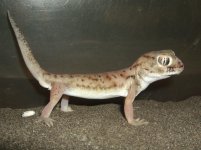
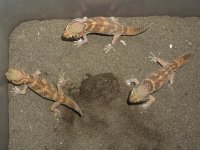
Your T. bedriagai are stunning. The pastel colors are beautiful. I kept a number if T. Microlepis and T. Mackerensis in 2002-2003. They were active feeders and always moving. I kept them in trios. They all died egg bound. Shortly after the females died the makes died. Egg development occurred fast, and the eggs appeared to be large for their size. As much as they like to tunnel I kept a large area of moist sand and PVC pipes. I wonder if they needed a drier place to lay, causing egg binding. The constant activity and appetite didn't prove to me to make any housing adjustments. Frustrating way to loose a very cool species of geckos. I intend on acquiring a group if Teratoscincus in the future. Keep me in mind if you have any offspring. geckosbybrad@msn.com Brad Teague
Thanks for the comments! My T. bedriagai are very active feeders, and they are very active and fast (!) in general. My microlepis female eats everything, but male takes so far only undusted mealworms and occasional pupae of the beetle, need to switch him to crickets and roaches however...
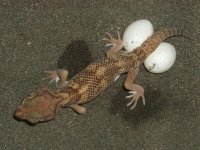
I bred only T. keyserlingii, and the eggs in comparison to female body size are indeed huge.
Where can I read about T. Mackerensis? Never heard of that before.
I bred only T. keyserlingii, and the eggs in comparison to female body size are indeed huge.
Where can I read about T. Mackerensis? Never heard of that before.
GeckosByBrad
New member
Thanks for the comments! My T. bedriagai are very active feeders, and they are very active and fast (!) in general. My microlepis female eats everything, but male takes so far only undusted mealworms and occasional pupae of the beetle, need to switch him to crickets and roaches however...
I bred only T. keyserlingii, and the eggs in comparison to female body size are indeed huge.
Where can I read about T. Mackerensis? Never heard of that before.
T. Mackerensis are more grey in coloration. If, I remember right a little but larger. Their patterning is different.