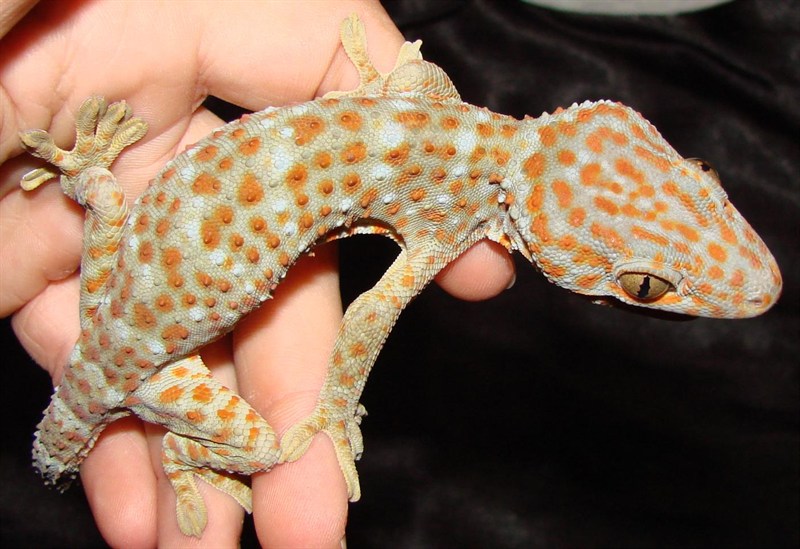
tokay at national zoo

aquamentus_11

New member
Went to the zoo in DC a few weeks ago and naturally checked out the reptile house. Has anyone seen the tokay exhibit? It was basically made to look like a crappy shed: minimal hiding places on the wall (paint brush, maybe a picture frame), a few boards on the floor. It was a unique spin I guess, showing that they are often found inside structures, but the interior was just very sparse. The one cool feature was the big old male they had in there. His head was almost as thick as it was long lol and he was old and gnarly looking.
 

billewicz

New member
So yeah, I live 15 minutes from the National Zoo and visit 3 or 4 times a year. I also try to visit other reptile exhibits at other zoos across the country when I travel.

The National Zoo has spent a fortune upgrading several areas of the zoo but the reptile house is no longer the cutting edge exhibit it once was. It just seems there is not as much interest and funding for it.

The last time I went a third of the enclosures were empty. Most of the animals are typical of the pet trade with just a few, and typically very old exceptions. I did not see a Komodo Dragon, something this zoo is famous for the first successful breeding of.

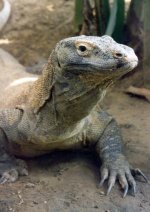
Kamodo Dragon LR.jpg

They used to have very, very big Malaysian type Tokay both in the reptile exhibit and used for clean-up in most of the larger small mammal exhibits. Now they are all very old Indonesian normals and the pair in the reptile house are really way over weight. This is sad for me to see.

:idea:I'd like to see a list of referrals of great reptile exhibits and zoos that people would like to recommend visiting.:idea:
 

aquamentus_11

New member
go to the detroit zoo. they were renovating part of the reptile house the last time i was there, but the amphibian house is just awesome.
it's funny that you mention the national zoo having lots of pet trade species because i said the same thing to my girlfriend. the detroit exhibit has a nice variety and a nice big reticulated python enclosure that was just built in the past several years.
 

aquamentus_11

New member
btw mike, i tried to find examples of indonesian vs. malaysian tokays without success. what's the difference? do you have pics?
 

Kita

New member
I don't have pics under the same lighting, but it should be obvious enough.Malaysian Tokays are known for blood red spots with a much paler, more blue-white base when unfired.

23516_184956_VeryLarge_NCnk7ZJTIr4wTq8.jpg


Where Indonesian are more orange in color in their spots and base giving almost a greenish orange tint to their base.

94178_208353_VeryLarge_Fyaqm5efpQisYi.jpg
 

billewicz

New member
I don't have pics under the same lighting, but it should be obvious enough.Malaysian Tokays are known for blood red spots with a much paler, more blue-white base when unfired.

23516_184956_VeryLarge_NCnk7ZJTIr4wTq8.jpg


Where Indonesian are more orange in color in their spots and base giving almost a greenish orange tint to their base.

94178_208353_VeryLarge_Fyaqm5efpQisYi.jpg

Thanks for posting your pics since I will not get to pulling and posting pics for a few hours. Your Indo is very nice, most are a light or dark gray with orange and light blue spots.
 

Riverside Reptiles

Administrator (HMFIC)
Tokays are pretty urbanized and their "natural" environment actually does include living in houses, huts, and other urban buildings in the "wild". I've actually considered doing an urban type vivarium for them just for fun. They are an amazing and adaptive geckos that do well in a huge range and variety of landscapes.
 

billewicz

New member
Yeah I like the urban 'enclosure' idea too. The closest I've come is the loose Tokay in the reptile rooms that are used for cricket clean-up.

I now have a couple that have expanded to other parts of the basement, like the laundry room. These are usually 'Urban hatchling' that escaped the room while they were small and have grown up in the laundry room since there is water there. Water attracts crickets, so there's food there as well.

I usually catch these guys as juveniles and get them their own enclosure. :biggrin:
 

Aimless

Super Moderator
my yearling Tokay was born in my friend's turtle room, where he keeps a feral pair to control bugs :) if my place was just a little more humid I'd want a free-range pair in my house, too. I think they like the space to roam.
 

billewicz

New member
i'm fairly certain that i've only ever run across indonesian tokays. are there people that breed just the malaysians?

Not really but sort of at the same time. Tokay were exported out of Malaysia by the thousands into the pet trade for many, many years. For most of us 'older' folks, this was our first or second reptile. They were so common at the pet store and dirt cheap, that no one ever thought to breed them. There surely was no money in it as long as imports could be had for $10.

Then, several years ago, Malaysia closed their borders to export and made possession in their own country illegal as well. So we've seen Indonesian imports and some Vietnamese imported since then.

Now the Malaysian 'type' was almost always the light blue with bright red or orange spots. The Indonesian Tokay can be gray with orange and light blue spots (normals), green with dark green and blue dots (aberrant), and a whole host of color morphs as well. One can also find light blue with orange and blue spots very much like the typical Malaysian 'type'.

This is because Indonesia is really several islands and parts of peninsulas, one of which shares a border with Malaysia. The trouble is that no one has ever bothered on their end or cared on our end to document where these various Tokay are collected from.

Think of the 'rediscovery' of Rhacodactylus in the '90's. Especially Leachianus which has several Island and mainland locales/morphs. Unfortunately for Tokay enthusiasts, there is no funding or desire from the Indonesian Government to do the same field research and documentation.

The only reason we get any morphs at all is because they collect millions of Tokay a year for processing into human food. Any animal that looks unusual is set aside for bid on the open world pet trade.

As to your question, I know Megan Wiess and I both have breeding groups of 'Malaysian type' Tokay. I say 'type' to describe this once common import, because mine are from Indonesia and Vietnam, not Malaysia.

Even the National Zoo did not seem to bother to breed theirs when they had several big beautiful specimens. They also seemed to believe they would always be available as cheap imports.

I'm working to breed these back as a staple of captive bred Tokay. It will take a few years but we've at least begun. More people would do the same if there was some money in it but sadly, no.

As long as imports are sent by the hundreds at a time for cheap, or sometimes for free as a gift with larger Indo orders, they are going to get dumped on the pet trade for $6 wholesale and maybe $15 to $20 retail.

Even though there are a dedicated few who understand the value of a captive bred Tokay, there is very little incentive to compete against those numbers and it's tough to just break even.

But things can change overnight, so who knows, ....

Michael's Tokay Hoard @ www.billewicz.com

 

aquamentus_11

New member
well closing borders may be a double-edged sword then: while i know that you would hate to lose the opportunity to add new genetics to your project, it would also raise prices and make people take cb's more seriously. it's funny to me that the best species (imo) was also one of the first to be established in the pet trade and seems to still be relatively underrepresented in the breeding scene relative to how long it's been around.
 

billewicz

New member
Yes, if CITE's were to regulate Tokay harvests, then export would be restricted and the prices would go up.

Indo has a thriving reptile 'farming' export in Green, Black, Yellow & Blue Tree Monitors. I don't see their borders closing anytime soon despite the rumors to push up prices. If CITE's did start regulating Tokay harvests, they would just start 'farming' them to skirt the regulations since they only count wild populations.

Now 'farming' can simply mean putting up a giant net/fence around an area of virgin forest, claiming it's a farm and then harvest everything in it with impunity. Then they just move the fence.

There are huge monitor farms there that really do breed and raise them in pretty good numbers in massive screened enclosures. Tokay could that way just like Iguana are farmed in South America for food and skins. Southern 'Chicken'!!!
 

getula72

New member
The Tokay exhibit at the NZP used to be a cage with bamboo running up the sides and back with the biggest Tokay I have ever seen.

If you didn't think they were impressive animals before you walked in front of that exhibit your mind would be changed.
 

billewicz

New member
The Tokay exhibit at the NZP used to be a cage with bamboo running up the sides and back with the biggest Tokay I have ever seen.

If you didn't think they were impressive animals before you walked in front of that exhibit your mind would be changed.

That's how I felt about the big blue boys in the Golden Marmoset and mixed small mammal enclosures several years ago. They appeared to easily be 14" long and really healthy.
 

billewicz

New member
Are you sure they're no longer in those exhibits?

There are Tokay in the exhibits. They are used for roach and mice reduction. I was there last fall and I had a long conversation with one of the keepers in the small mammal house. The only Tokay I saw were gray Indonesian with orange and light blue spots. The ones I saw were large but not the really big ones I'd seem before.

That's not to say I saw them all. I probable saw a couple of females or younger animals and did not see the male.

Either way, my point was that they did not have on display in the reptile exhibit or running loose elsewhere the Malaysian 'type' blue with red/orange spots.

I got the impression that most of the reptiles on display were whatever they could import as needed and there was no breeding program or most of them. Only the Komoto Dragons seemed to have a serious program.

Here's the list of what they keep: nationalzoo.si.edu/Animals/ReptilesAmphibians/Index/default.cfm

The rest of the zoo has cutting edge breeding programs or most of the animals on display, just not reptiles.
 

getula72

New member
Mike, I am friends with one of the keepers in the reptile house. This person even came to my house last summer and spent HOURS patiently sitting on the floor of my snake room trying to get a handful of my neonate green tree pythons to feed.

Last time I was there, with my Cub Scout Pack last fall, a lot of cages were in preparation for new exhibits. There is a lot going on in there and I have been fortunate enough to go into the basement of that building and see some of the stuff they are doing. It's actually pretty impressive. I wish I had that job!!!!
 

billewicz

New member
Yeah, I did see several enclosures being refitted.

When I was just out of high school, a friend of mine was a volunteer at the zoo. Now 30 some odd years later she runs the Raptor House and the Sea Lion area of the zoo.

We too would go in at night and weekends to see all the off display animals. Ones to old, too sick or too many to have out front. I too have fond memories of those years swimming with the Sea Lions and feeding all sorts of animals.

I suspect the reptile house will get some improvements. I'd just like to see it more in the forefront of establishing breeding groups of truly endangered reptiles and displaying animals most of us will probably never see. Not just a fine collection of pet trade imports.
 
Top