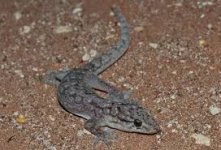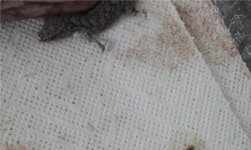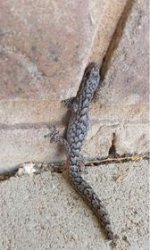
Gecko with injured legs

NoIdea

New member
Hi Guys,

3 days ago a little gecko (appears to be a velvet gecko) was in my backyard and I let him be but later he must have decided to hide under the screen door and my roommate has opened the door and crushed his 2 left legs. I took him to the vet straight away and they said there wasn't much they can do for him but I could leave him there and they would put him down. I didn't want that because he seemed very alert and responsive and I think he could be saved and was a bit of an easy way out for a vet that didn't seem to care at all. I rang 2 others and similar responses. I've never owned a gecko, let alone an injured one, but I went out and bought a tank, heat mat, sand substrate, water bowl, etc. to put the him in and make him comfortable. I've tried feeding him some calcium dusted crickets but he's not interested in eating (which is pretty understandable), though I was thinking I might buy some meal worms and put them in his tank overnight and see if he eats any.

Anyway his front leg is pretty much crushed, and the skin around it is starting to shed, and the back leg appears to be swollen with a crushed foot. He hasn't moved either leg (or not that I've seen). His wound was cleaned by the first vet so hopefully that should help reduce the risk of infection. I've been keeping the tank temps around what I'm supposed to from what I've read and he certainly does get more active at night which I think is a good sign and he can still move quite fast but I'm worried I might be prolonging his pain or doing something wrong as I have no experience and I've been trying to find any advice without a massive amount of luck.
 

Completeleopard

New member
Hello and a warm welcome to GU,


I don't have any experience with velvet geckos, but can try to help.

1. Any chance of pictures of your gecko?

2. If both left legs are broken, how can he move!? Or are they just cut and damaged?

3. If they are open wounds change your substrate to paper towel and keep the cuts clean and dry.

4. They are nocturnal I think so they will most likely only eat at night.
 

NoIdea

New member
Thanks very much and cheers for getting back to me.

Any help would be much appreciated. I've left mealworms in his enclosure 2 nights in a row and last night he finally ate one so he is at least eating something which is a relief.

I've tried to get photos but I'm really not having any luck at all as he spends all day hiding and I just can't seem to see him when I look in at night. I'll definitely keep trying to get a photo as he's sure to come out at some stage, I just don't want to handle him or move things in his enclosure at the moment given what he's been through which would just stress him out more.

Both legs are definitely crushed and broken, he sort of uses his right legs and slides like a snake to get around, and he can definitely get around still. If he does come out I might try to get a short video of him moving so you can see how he does it and what he's doing with his left legs.

Yeah I read about that and his wounds weren't open when I put him in the enclosure and the vet said it would be fine.

At this stage he's eating so that's a big positive so I think this will just be one of those wait and see moments. Does you have any advice on signs of infections with these geckos?
 

Elizabeth Freer

Well-known member
NoIdea said:
I went out and bought a tank, heat mat, sand substrate, water bowl, etc. to put the him in and make him comfortable.

Hi NoIdea ~

Welcome to Geckos Unlimited. Very sorry that I could not reply to your PM a couple days ago on April 23rd. :-(

Please google Australian velvet geckos for similar pictures and share one of those. It would be helpful to know where you found him.

How was he behaving when you first noticed him in your yard and before he was injured?

1. Signs of infection: warmth, redness, swelling, discharge like pus.

2. Definitely switch the sand substrate to paper towels or tile. His hunting skills are significantly reduced with such injuries. Even a little sand in a substrate mix can be problematic with healthy Oedura. (I breed Oedura castelnaui.)

3. Confine this little guy's mealworms in a shallow lid to make them easy to reach.

4. Heating with an overhead dome regulated by a thermostat might be better, especially if the heat mat overheats and he is unable to escape.

5. What are the temperatures and size of enclosure?
 

NoIdea

New member
Ok so I found a pic that looks quite like him images.jpg (hopefully that picture works) I'm in rural New South Wales in Australia.

Before he got the injury he ran onto the back pavers from under a post, sat there and watched ants for a few minutes in the sun, then ran under the mower and I didn't see him til after the injuries.

Ok well I got a bit of a look at him but couldn't get a picture. There's no puss or anything like that, and because the legs are crushed there's no swelling and the swelling in his back leg looks like it has gone down a bit.

I managed to, over the course of the day, put paper towel on top of the sand without disturbing him too much so thanks for that, you're right he did a quick scamper to a different hiding spot and looked like he moved a lot easier so thanks for the suggestion.

I already had the mealworms in a small lid for him and I thought he'd eaten one last night but he carried it from the lid into his watering dish (there's a little lip on the watering dish and on the worms dish so the worm couldn't have gotten there by itself) and left it there. I took it out but should I have left it there? Not sure if he was planning on a late snack...

Heating wise I'm using both a heat bulb and a heat map, alternating between the bulb during the day and mat at night (temps are just shy of 30 during the day and 25 at night). The enclosure is a 500mm x 300mm x 300mm. I didn't see the point in getting a tall enclosure as unfortunately, while he can grip onto the little bit of fake plant in his enclosure, he can't climb anymore which is also a bummer cause I can't give him any vantage points as he won't be able to get to them.

To be honest his colours seem to have changed in the last few days, he's gotten a much darker shade of brown and grey. Not sure if this is adapting to his new climate or not though...? He's not squinting, and he doesn't really move at all during the day but at night I here him moving around which makes sense given he's nocturnal but I'm not sure if they're supposed to be more active during the day at all. He seems really hesitant to move at all if I'm doing anything to his enclosure even if I'm moving something right next to him...

And thanks for the replies guys!
 

Completeleopard

New member
Thanks for the update!

1. Its a good sign that there's no puss or anything and that the swelling is reducing.

2. Elizabeth, could the gecko have taken the mealworm over to the dish to try to make it softer ?

3. I would recommend getting other feeders, that are softer bodied, however I'm not sure about the diet of velvet geckos but I'm sure Elizabeth will.

4. Not sure if this is a good idea or not, Elizabeth will verify, but maybe try putting some mealworms mashed up, just the guts in another feeding dish, as he is checking out the enclosure at night, he may find it and have some.
 

Elizabeth Freer

Well-known member
NoIdea ~

Click right here to post that picture: Identify this gecko species

Hopefully some people like Tamara or Ingo might know?

You're welcome for the paper towel suggestion. Good removing the worm from his water bowl!

Heating
heat bulb = day
heat mat = night
30*C = 86*F
25*C = 77*F
 
Last edited:

Elizabeth Freer

Well-known member
Thanks for the update!

1. Its a good sign that there's no puss or anything and that the swelling is reducing.

2. Elizabeth, could the gecko have taken the mealworm over to the dish to try to make it softer ?

3. I would recommend getting other feeders, that are softer bodied, however I'm not sure about the diet of velvet geckos but I'm sure Elizabeth will.

4. Not sure if this is a good idea or not, Elizabeth will verify, but maybe try putting some mealworms mashed up, just the guts in another feeding dish, as he is checking out the enclosure at night, he may find it and have some.

2. Don't "think" a gecko would relocate a worm to soften it.

3. Oedura are insectivores. Any chance you could get young mealworms or better yet mealworm pupae? There are softer nutritious feeders like mini-hornworms and very small silkworms. Do any pet stores carry those?

My vet recommends earthworms. I have a local source (my yard), but I just don't know about them.

4. Try mealworm guts like Completeleopard suggests! In fact, how about placing a small lid right close to him?

Is it possible to place mealworm guts on his nose?

5. What is his total length?
 
Last edited:

Completeleopard

New member
Thanks for replying to my questions, Elizabeth!

Noldea -

Placing the bowl of mealworm guts close to the entrance to the geckos hide will help him find it quicker!

Elizabeth -

It is a hard one, however, as Noldea suggested, it seems wrong to put a gecko down that is still 'fighting' and is active and alert. However, I do understand that most reptiles are masters of disguise when it comes to showing that they are healthy even though they are hurt.
 

NoIdea

New member
Hi guys,

Ok so I crushed up some meal worms, put them on a small piece of cardboard and slid them in to where he was hiding right in front of him then covered back up his enclosure for the night so hopefully we get some progress. I did manage to put a small amount of mealworms guts on his nose but he still hadn't licked it off after 20min so I'm not sure if I'm going to have any luck there.

Also he did a poo. The poo itself was small and solid and long but there was quite a bit of liquid around it. Is this normal?

Unfortunately around me I don't have a lot of choice when it comes to feed, the pet shops and vets only stock crickets or mealworms, but after work tomorrow I might try a tackle shop and see if they have any.

It's a little hard to tell what his total length is given he lost his tail but without a tail I'd maybe say 2.5 inches, and maybe 4 and a bit with his tail.

yeah I am worried I'm just prolonging his misery given he's used to being outside and now he's stuck in an enclosure and could be on a path of no return anyway but I couldn't let them put him down if he has a chance of pulling through this. His colours have seriously darkened though, do you guys know if this is normal for geckos going from the wild to captivity?
 

Completeleopard

New member
Hello!

1. That sounds fine regarding his poo, most species of gecko have a smal wet patch around their poo, its just excess water. Elizabeth, do these geckos produce urates?

2. When did he lose his tail?

3. I know that in some species of lizard they change colour depending on their mood, usually a dark colour means a bad mood or stressed
 

NoIdea

New member
Ok thanks a lot for the information, that's a bit of a relief to know that it's not necessarily because he's sick.

He lost his tail when his legs got crushed under the door, I checked at the time and it was there.

I left the mealworm guts in front of him and he didn't appear to eat anything overnight (the small amount on his nose was gone but not sure if he ate it or rubbed/washed it off). I think I'll just keep trying with the worms and crickets and hope he will eventually eat. I heard that in winter some species of geckos don't really eat very much at all so I'm hoping that might be it although he does appear to have dropped a bit of weight.

I think this will just be a wait and see scenario, I'm not sure there's more I can do for him. He's as comfortable as I can get him and I got him the best food available to me so I'm at a bit of a loss as to how else to help him. Hopefully he'll get used to his enclosure and start to settle down.
 

Elizabeth Freer

Well-known member
Ok thanks a lot for the information, that's a bit of a relief to know that it's not necessarily because he's sick.

He lost his tail when his legs got crushed under the door, I checked at the time and it was there.

I left the mealworm guts in front of him and he didn't appear to eat anything overnight (the small amount on his nose was gone but not sure if he ate it or rubbed/washed it off). I think I'll just keep trying with the worms and crickets and hope he will eventually eat. I heard that in winter some species of geckos don't really eat very much at all so I'm hoping that might be it although he does appear to have dropped a bit of weight.

I think this will just be a wait and see scenario, I'm not sure there's more I can do for him. He's as comfortable as I can get him and I got him the best food available to me so I'm at a bit of a loss as to how else to help him. Hopefully he'll get used to his enclosure and start to settle down.

NoIdea ~

1. Click: Oedura Robusta - YouTube

The reason I am sharing this YouTube video is that I am wondering whether your little guy might be interested in surfaces (sandstone?) sloped even more gently than this video shows. You might adapt a route so that he does not even have to climb "up" to the sandstone, maybe thin slate?

This will maybe enable him to choose temperatures more to his liking.

2. Perhaps try more mealworm guts on his nose?

3. Link to other Aussie Oedura/velvet geckos for comparison: DIPLODACTYLINE GECKOS - VELVET GECKOS

4. Not sure why he is darkening. Could be stress??? However, some geckos "color up" when they are comfortable.
 
Last edited:

Elizabeth Freer

Well-known member
Injured Aussie gecko

Hi guys,

Ok so I crushed up some meal worms, put them on a small piece of cardboard and slid them in to where he was hiding right in front of him then covered back up his enclosure for the night so hopefully we get some progress. I did manage to put a small amount of mealworms guts on his nose but he still hadn't licked it off after 20min so I'm not sure if I'm going to have any luck there.

Also he did a poo. The poo itself was small and solid and long but there was quite a bit of liquid around it. Is this normal?

Unfortunately around me I don't have a lot of choice when it comes to feed, the pet shops and vets only stock crickets or mealworms, but after work tomorrow I might try a tackle shop and see if they have any.

It's a little hard to tell what his total length is given he lost his tail but without a tail I'd maybe say 2.5 inches, and maybe 4 and a bit with his tail.

yeah I am worried I'm just prolonging his misery given he's used to being outside and now he's stuck in an enclosure and could be on a path of no return anyway but I couldn't let them put him down if he has a chance of pulling through this. His colours have seriously darkened though, do you guys know if this is normal for geckos going from the wild to captivity?

Hello!

1. That sounds fine regarding his poo, most species of gecko have a smal wet patch around their poo, its just excess water. Elizabeth, do these geckos produce urates?

2. When did he lose his tail?

3. I know that in some species of lizard they change colour depending on their mood, usually a dark colour means a bad mood or stressed


1. How about placing the crushed mealworm guts on a piece of plastic, so the "juice" does not soak into the cardboard you describe?

2. Feed him at night.

3. Spray the enclosure nightly to increase the humidity. Shield the gecko to prevent any stress.

4. Liquid around the feces indicates he seems to be remaining hydrated. These geckos DO produce urates.
 

NoIdea

New member
So I put some more mealworms guts on his nose and this time he licked it off so I put another lot which he licked off before running back to his hiding spot so good news! I've put a small plastic dish with guts in near him too so hopefully he has a bit of a feed tonight.

I've taken you're suggestion and have a slightly elevated length which gradually rises to give him a bit of a viewing platform too so thanks for that.

I've also managed to take a picture of him tonight and it turns out my roommate took a photo of him the day before the incident so see attached (and you can see how much darker he's gotten!

20140427_143612_2.jpgUntitled.jpg

Hopefully given he's eating he might be on the mend so fingers crossed and thanks for the help so far!
 

Completeleopard

New member
Noldea -

1. Maybe try mashing some crickets up, he may not like mealworms?

2. Elizabeth, regarding the gecko losing some weight, wouldn't be a good idea to try to jump start his appetite? Maybe even try some turkey baby food, after all, this geckos lost their tail and is losing weight.

3. There are many places online to order foods for geckos !
 

Elizabeth Freer

Well-known member
So I put some more mealworms guts on his nose and this time he licked it off so I put another lot which he licked off before running back to his hiding spot so good news! I've put a small plastic dish with guts in near him too so hopefully he has a bit of a feed tonight.

I've taken you're suggestion and have a slightly elevated length which gradually rises to give him a bit of a viewing platform too so thanks for that.

I've also managed to take a picture of him tonight and it turns out my roommate took a photo of him the day before the incident so see attached (and you can see how much darker he's gotten!

View attachment 29903View attachment 29904

Hopefully given he's eating he might be on the mend so fingers crossed and thanks for the help so far!

You are very welcome. :banana: for giving this little guy so many options.

It is very important to keep him hydrated too. Wonder whether he is drinking any water?

Could you order some very, very small hornworms from an online source? They are good sources of nutrition and excellent sources of moisture.

Click: http://www.geckosunlimited.com/comm...feeding-issues/68585-hornworm-guidelines.html

Oedura like humidity in the evening. What do you think about misting his enclosure, yet shielding him from the droplets?

Have you a source for Oxbow's Carnivore Care? It is a powdered all-in-one complete diet that you mix with water. In the USA we can order it via Amazon. It is better than Flukers' Repta+Boost which is marketed at pet stores.
 
Last edited:
Top