

Well,
morphs of leos depend on their genetic. Some morphs look the same, but the genes implied are different.
To be able to tell the morph we need to know the genetics of the parents, a picture of the eyes, a picture of the entire gecko too. With good lights and good quality. If you don't know the parents, please give as much pictures as possible, hatchling and adults.
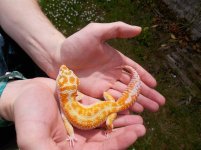
A lot of factors can also change the way 2 identic morphs will look. Incubating at low temps or high temps will make a brown orange change to a bright flashy orange. The age of the gecko plays a role too, and is really hard to tell the morph of juveniles since they will change a lot, and some colors such has tangerine or red stripes can appear only after 6 to 8 months. In my case the red stripes of my giant tremper red stripe extreme emerine appeared when he was 7 month old. This bright orange and yellow with a white belly gecko was entirely yellow while young. (9 months old on the picture)/
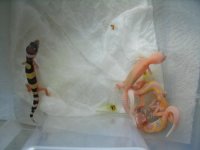
To give an example of how they change and how difficult it is to guess juveniles' morph,
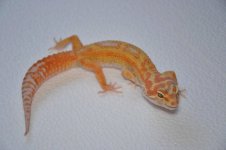
see the second gecko from the right corner. It is a 3 days old juvenile, son of the previous gecko (picture taken before putting them in separate boxes). On the 2nd picture, it is the same gecko, 7 months later. All of the red appeared between 6 and 8 months, like his father.
So please give as much as possible information and pictures of your geckos. They are hundreds of morphs, and thousands of variations.
PS: despite my "newbie level"on the forum I am working with various combo and high end morphs. Even if I know my own geckos' genetics, sometimes it is hard to tell which juvenile is what, even with the help of renowned European breeders, which answers ara often "wait and see".
morphs of leos depend on their genetic. Some morphs look the same, but the genes implied are different.
To be able to tell the morph we need to know the genetics of the parents, a picture of the eyes, a picture of the entire gecko too. With good lights and good quality. If you don't know the parents, please give as much pictures as possible, hatchling and adults.
A lot of factors can also change the way 2 identic morphs will look. Incubating at low temps or high temps will make a brown orange change to a bright flashy orange. The age of the gecko plays a role too, and is really hard to tell the morph of juveniles since they will change a lot, and some colors such has tangerine or red stripes can appear only after 6 to 8 months. In my case the red stripes of my giant tremper red stripe extreme emerine appeared when he was 7 month old. This bright orange and yellow with a white belly gecko was entirely yellow while young. (9 months old on the picture)/
To give an example of how they change and how difficult it is to guess juveniles' morph,
see the second gecko from the right corner. It is a 3 days old juvenile, son of the previous gecko (picture taken before putting them in separate boxes). On the 2nd picture, it is the same gecko, 7 months later. All of the red appeared between 6 and 8 months, like his father.
So please give as much as possible information and pictures of your geckos. They are hundreds of morphs, and thousands of variations.
PS: despite my "newbie level"on the forum I am working with various combo and high end morphs. Even if I know my own geckos' genetics, sometimes it is hard to tell which juvenile is what, even with the help of renowned European breeders, which answers ara often "wait and see".
Last edited:
