


Zux
New member
Growing and caring for Phoenix / Calci / Repti-Worms AKA: Black Soldier Fly Larvae
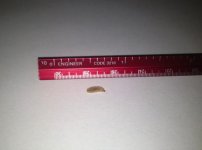
Worm before
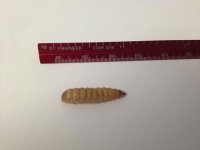
Worm after but not even fully grown yet
You need 4 things to do this.
1: The worms you wish to grow, any brand, any quantity - they are all black soldier fly larvae the only difference is in their diet before they are shipped to you and the media they arrive in.
2: A container of appropriate size in which to lay your new substrate which will also be their food. - I use a medium critter keeper.
3: A heat source - These Larvae are most active and feed the most at a temperature of 95F.
With that in mind I have found that most if not all UTH's or heat mats work fine to provide this temperature even when unregulated as the worms will simply move to a depth at which they prefer to be.
I have also read that the Flukers brand UTH maintain a 100 degree steady when unregulated which would be perfect as when placed on top the inside of your container should be around the perfect temperature.
4 A food source So without going into too much detail these worms mouths are essentially straw like in their action, that is to say they cannot chew or break down hard food sources effectively if at all. It is important to keep this in mind when choosing a food source for them.
What I do is soak organic whole wheat in a blend of fruits and vegetables I choose from a list I would use to gut-load my feeder insects from. But other people use things like baby food or just soft fruits like banana or crushed berries.
The worms themselves do not gut-load well and the goal here is grow the already miraculously healthy worms to a larger size as distinct from what we would normally do with a cricket or roach which would be to fill their stomach with other nutrients.
So now that you have everything you need the rest is very simple and ill break it down into steps.
Step 1: Rescue your worms from whatever media they are currently in as this isnt doing anything for them or you apart from keeping them from drying out. You can do this however you wish but I like to simply dump the entire pot of worms and media into a dish of water and fish out the worms which almost always float to the top instantly.
Step 2: Saturate your substrate with the food source as your worms are drying off you can use this time to soak your new substrate in your soft food. As I mentioned earlier I use whole wheat bread as it is very porous and this allows the worms to burrow down as they like to do and feed on the fruit and or vegetable matter that I have soaked the bread in. They tend to avoid eating much of the bread and will favor the soft food you provide as long as it is there. I make sure both sides of the bread are covered in the mixture of fruit/veg at the very least.
Step 3: Add both the substrate and worms to the container by laying the bread out covering the entire surface area of the container (making sure its between 1/2 and 1 inch thick) and simply dumping the worms in on top.
Step 4: Place your container on the heat source and you're done, within 10 minutes all the worms will probably be digging in to their new home and you will see size increases by the day (literally).
A few tips are as follows:
1: Replace the worms substrate/food every 3 days or so (depending on how dry it gets)
By doing this you not only ensure the food stays fresh and good for the worms and your reptile but also prevent any excess food causing mold. (I have never had this happen)
Replacing it is easy, simply fill your container with water, your worms will float to the top (perhaps some will need encouragement to part with their new home) and dump the contents out.
2: Keep the substrate moist, the larvae far prefer a moist environment and as long as you replace the food every 3 days or so this shouldn't be an issue, if your heat source is proving hot enough to dry out the contents quicker than this you can add a little water to buy you some time or just replace the food a day early each time, your call.
3: The worms should not pupate and turn into flies in this environment and will just turn black (which is the stage before) pupation. Black worms contrary to popular belief are not dieing but are in actual fact the most nutritious of all boasting higher calcium levels than their pale counterparts. I tend to feed black worms first as these are the ones nearing the end of their lifespan as-well as nutritional reasoning.
If you have any questions go ahead and ask me here and I will try to answer them.
I would also like to thank and give much deserved credit to Adriana from the Bearded Dragon forums for this whole idea and the pictures too.
- Shane
Worm before
Worm after but not even fully grown yet
You need 4 things to do this.
1: The worms you wish to grow, any brand, any quantity - they are all black soldier fly larvae the only difference is in their diet before they are shipped to you and the media they arrive in.
2: A container of appropriate size in which to lay your new substrate which will also be their food. - I use a medium critter keeper.
3: A heat source - These Larvae are most active and feed the most at a temperature of 95F.
With that in mind I have found that most if not all UTH's or heat mats work fine to provide this temperature even when unregulated as the worms will simply move to a depth at which they prefer to be.
I have also read that the Flukers brand UTH maintain a 100 degree steady when unregulated which would be perfect as when placed on top the inside of your container should be around the perfect temperature.
4 A food source So without going into too much detail these worms mouths are essentially straw like in their action, that is to say they cannot chew or break down hard food sources effectively if at all. It is important to keep this in mind when choosing a food source for them.
What I do is soak organic whole wheat in a blend of fruits and vegetables I choose from a list I would use to gut-load my feeder insects from. But other people use things like baby food or just soft fruits like banana or crushed berries.
The worms themselves do not gut-load well and the goal here is grow the already miraculously healthy worms to a larger size as distinct from what we would normally do with a cricket or roach which would be to fill their stomach with other nutrients.
So now that you have everything you need the rest is very simple and ill break it down into steps.
Step 1: Rescue your worms from whatever media they are currently in as this isnt doing anything for them or you apart from keeping them from drying out. You can do this however you wish but I like to simply dump the entire pot of worms and media into a dish of water and fish out the worms which almost always float to the top instantly.
Step 2: Saturate your substrate with the food source as your worms are drying off you can use this time to soak your new substrate in your soft food. As I mentioned earlier I use whole wheat bread as it is very porous and this allows the worms to burrow down as they like to do and feed on the fruit and or vegetable matter that I have soaked the bread in. They tend to avoid eating much of the bread and will favor the soft food you provide as long as it is there. I make sure both sides of the bread are covered in the mixture of fruit/veg at the very least.
Step 3: Add both the substrate and worms to the container by laying the bread out covering the entire surface area of the container (making sure its between 1/2 and 1 inch thick) and simply dumping the worms in on top.
Step 4: Place your container on the heat source and you're done, within 10 minutes all the worms will probably be digging in to their new home and you will see size increases by the day (literally).
A few tips are as follows:
1: Replace the worms substrate/food every 3 days or so (depending on how dry it gets)
By doing this you not only ensure the food stays fresh and good for the worms and your reptile but also prevent any excess food causing mold. (I have never had this happen)
Replacing it is easy, simply fill your container with water, your worms will float to the top (perhaps some will need encouragement to part with their new home) and dump the contents out.
2: Keep the substrate moist, the larvae far prefer a moist environment and as long as you replace the food every 3 days or so this shouldn't be an issue, if your heat source is proving hot enough to dry out the contents quicker than this you can add a little water to buy you some time or just replace the food a day early each time, your call.
3: The worms should not pupate and turn into flies in this environment and will just turn black (which is the stage before) pupation. Black worms contrary to popular belief are not dieing but are in actual fact the most nutritious of all boasting higher calcium levels than their pale counterparts. I tend to feed black worms first as these are the ones nearing the end of their lifespan as-well as nutritional reasoning.
If you have any questions go ahead and ask me here and I will try to answer them.
I would also like to thank and give much deserved credit to Adriana from the Bearded Dragon forums for this whole idea and the pictures too.
- Shane
Last edited:


